Mobility
Practise walking and functional movement in a supportive environment.
Hydrotherapy is physiotherapist-led exercise in warm water, designed around each person's mobility, strength, balance and functional goals.
The water may reduce joint loading and provide support during movement, making exercise more manageable for some older adults and people living with pain, weakness or reduced mobility.
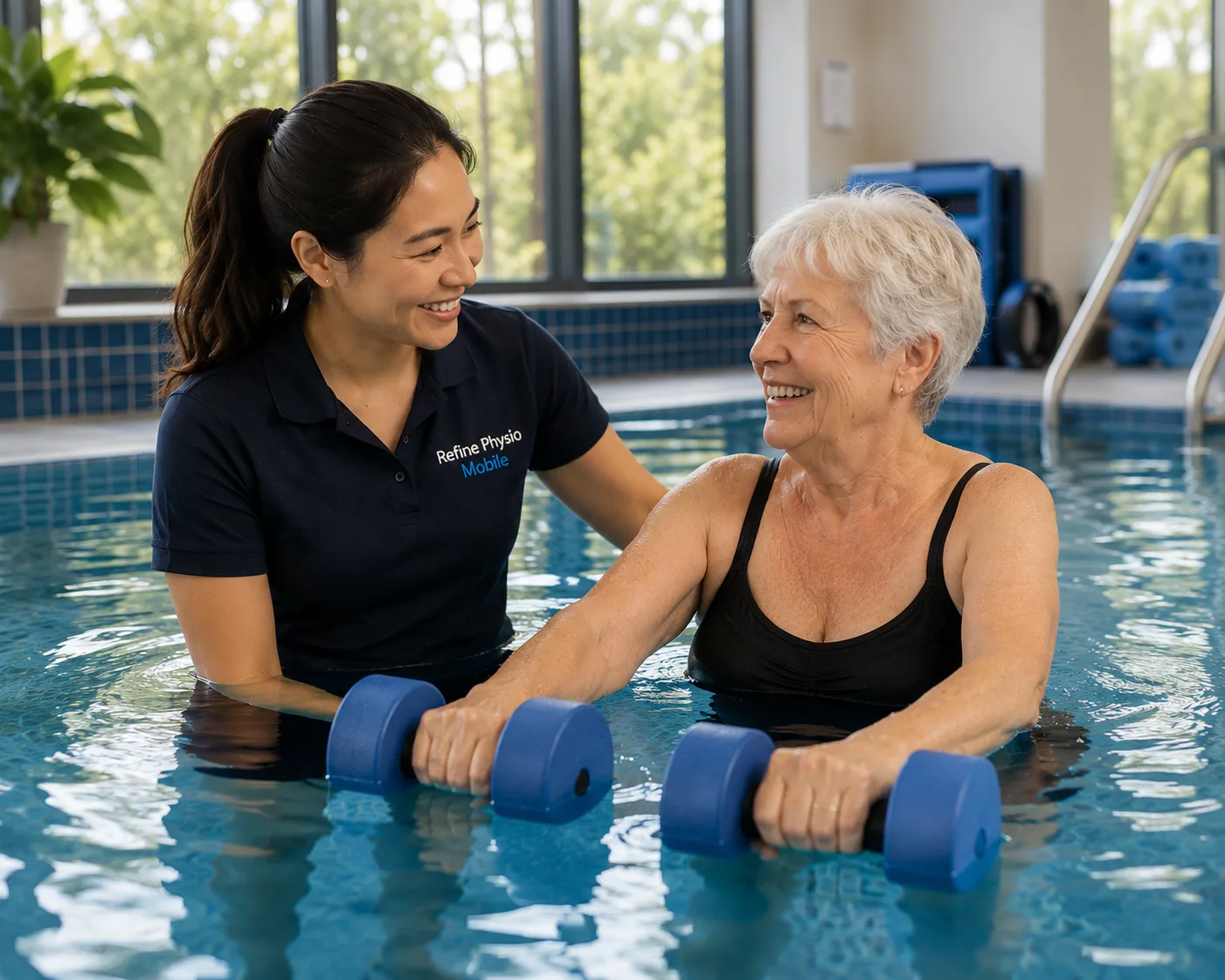
Water provides buoyancy and gentle resistance, which may reduce the amount of weight placed through painful joints while supporting movement and exercise.
A physiotherapist can use the pool environment to work on mobility, strength, balance, endurance and confidence at an appropriate level.
Practise walking and functional movement in a supportive environment.
Use water resistance to build strength at an appropriate level.
Practise control and stability with physiotherapist supervision.
Exercise with less loading through painful or sensitive joints.
Gradually improve tolerance for sustained movement and activity.
Build confidence before progressing to land-based exercise where appropriate.
Suitability depends on the person's health, goals, mobility, pool access and physiotherapy assessment.
Warm-water movement may feel more manageable when joints are painful or sensitive.
Post-operative exercise may begin once medically cleared where required and assessed as suitable.
The pool may provide additional support while practising stability and lower-limb control.
Programs may support mobility goals for people living with stroke, Parkinson's disease or multiple sclerosis.
Exercise can be adapted to current ability, confidence and functional goals.
A graded program may support a return to movement after illness, hospitalisation or reduced activity.
The program is tailored to the client's goals, health, current ability and confidence in the water.
Before hydrotherapy begins, a physiotherapist reviews the client's health, mobility, goals, falls risk, water confidence and access requirements.
Where hydrotherapy is not appropriate, we explain the concerns and recommend alternative physiotherapy options where possible.
Pool access, change-room requirements, assistance needs and transport arrangements are confirmed before the first session.
A full-width connected pathway that keeps suitability, access and communication clear.
We review the client's goals, health information, location, funding and service capacity.
A physiotherapist assesses mobility, suitability, risks and treatment goals.
We confirm an appropriate facility, appointment availability and access requirements.
The client completes an individual physiotherapist-led warm-water exercise program.
Exercises are updated, with relevant progress communicated to the referrer.
We accept referrals from providers, care managers, support coordinators, health professionals and families.
We identify required information and confirm whether a physiotherapy assessment is appropriate.
Pool location, mobility access and appointment arrangements are confirmed before treatment begins.
Each program is developed by a physiotherapist around clinical and functional goals.
Relevant outcomes, barriers and recommendations are shared where required.
Funding approval, pool entry fees and travel arrangements may vary by referral pathway.
Suitability and available funding are confirmed during intake before appointments are arranged.
Appointments are available at selected accessible hydrotherapy facilities.
Hydrotherapy is delivered at selected pool facilities rather than in the client's home. Pool location and availability are confirmed after referral. Selected Sunshine Coast referrals may be considered subject to clinician and pool availability.
Hydrotherapy is physiotherapist-led exercise in warm water, designed around the person's mobility, strength, balance and functional goals.
No. Swimming ability is not required. Water confidence, pool access and required assistance are reviewed before the program begins.
It may be suitable once the person is medically cleared where required and assessed by a physiotherapist.
A physiotherapist reviews health, mobility, goals, falls risk, skin integrity, water confidence and access requirements.
Sessions are held at selected accessible pool facilities. Location and availability are confirmed after referral.
This depends on the client's assessed needs, facility setup and required level of assistance. The supervision arrangement is confirmed before the first session.
Hydrotherapy pools are generally maintained at a comfortable therapeutic temperature, which varies by facility.
This depends on goals, health, response and progress. The physiotherapist discusses an individual plan after assessment.
Requirements vary by facility. We confirm swimwear, towels, footwear, mobility aids, medication and support-person arrangements beforehand.
Yes. Hydrotherapy may form part of a broader plan that includes home visits or land-based physiotherapy.
Funding may include Support at Home, CHSP, NDIS, DVA, private and residential aged care, subject to approval and suitability.
Choose the relevant referral pathway online or call our team to discuss suitability and capacity.
Send the referral and our team will review suitability, capacity, pool access and the next step.